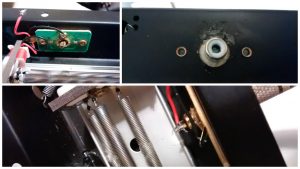
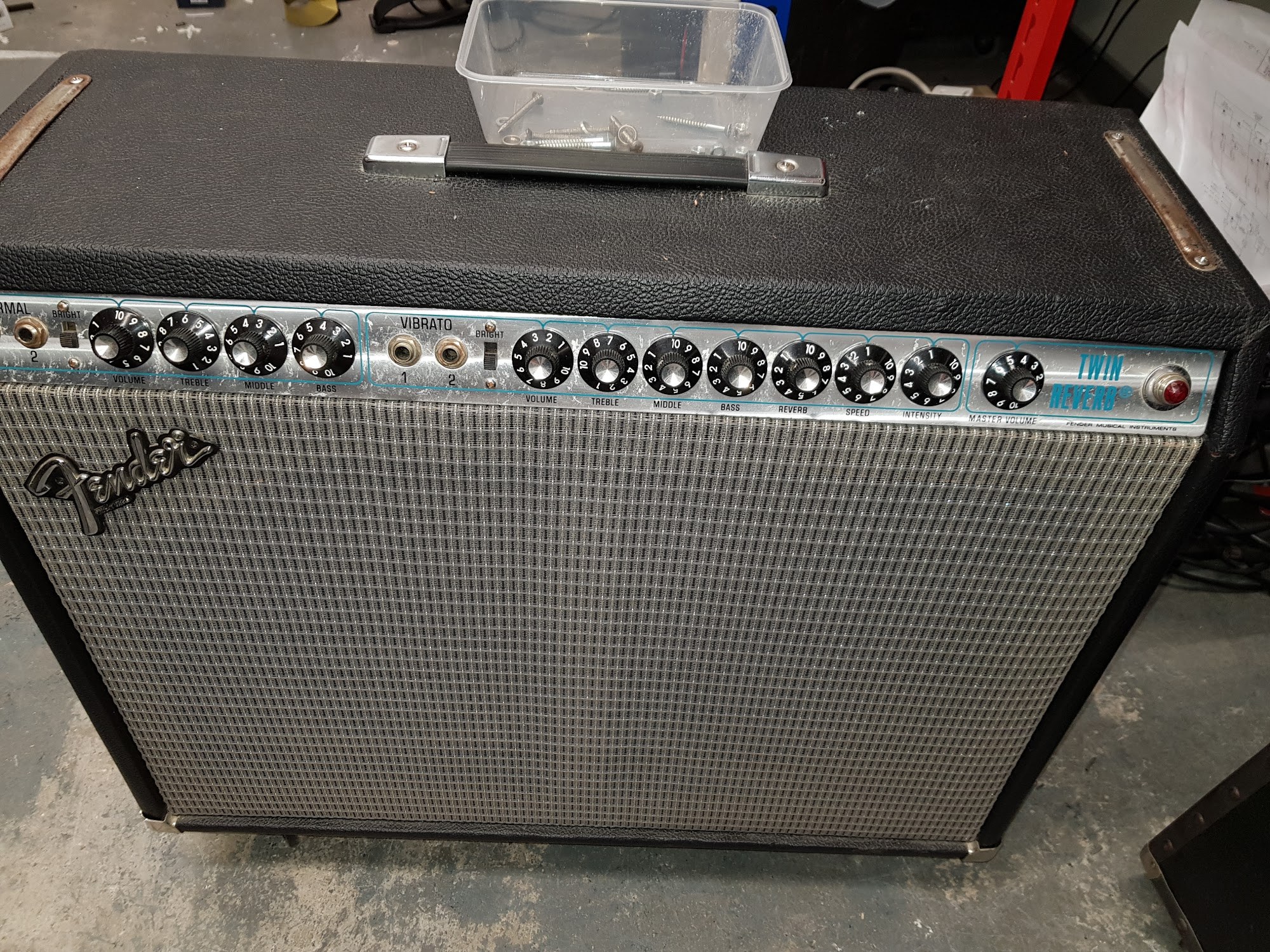
This Fender Twin Reverb came in with a handful of problems on the vibrato channel. It’s had a lot of owners over the years, and some earlier repair work had got it going again, but there were a couple of surprises inside.
Here were the symptoms, in the words of the customer:
- “Brightness switch not making a difference (this is fine on normal channel)”
- “No reverb, turning reverb level up brings in a lot of hum, but no reverb”
- “Tremolo Speed stops at about 7. Passed that and the tremolo effect goes away.”
- “Tremolo Intensity seems low”
The missing reverb and the hum were caused by a faulty reverb cable, which was replaced.
The tremolo problems were traced to the LDR (light dependent resistor), which the tremolo circuit uses to modulate the signal.
The bright switch wasn’t actually faulty. It works by adding a small capacitor across the volume control, so its effect is strongest at low volume settings and fades away as the volume goes up. At higher settings you’ll hear little or no difference.
Once the amp was apart we found a hack from a previous repair. A valve pin had been soldered back together instead of the octal valve socket being replaced. That can’t be spotted until the chassis is out, so we fitted a new socket.
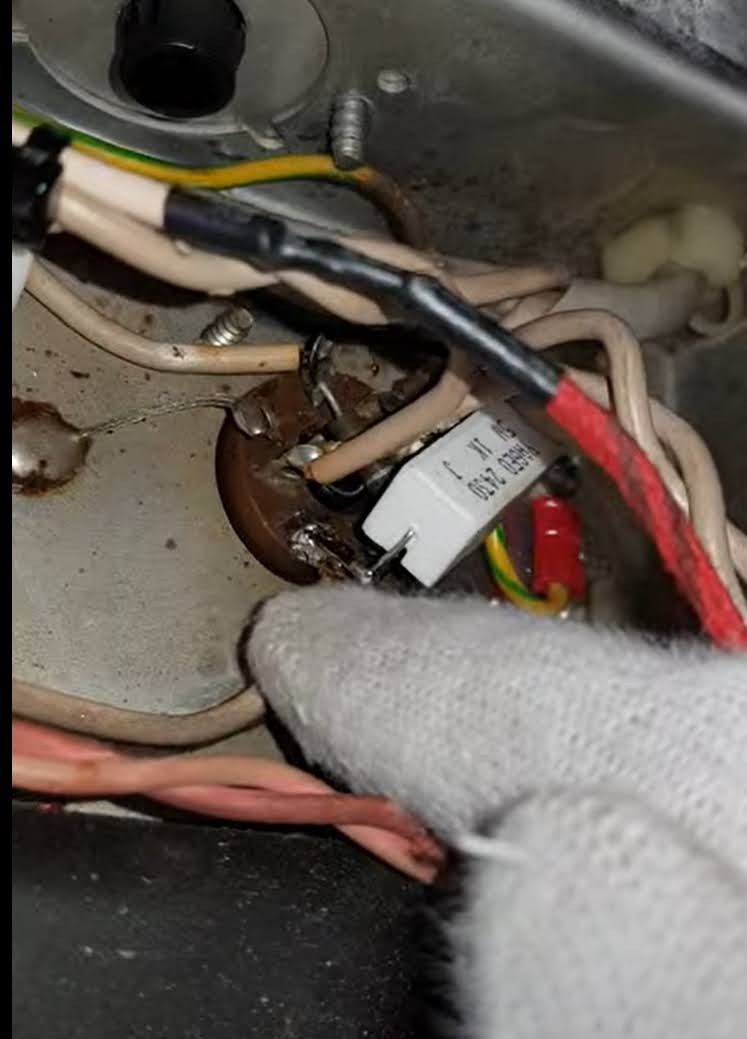
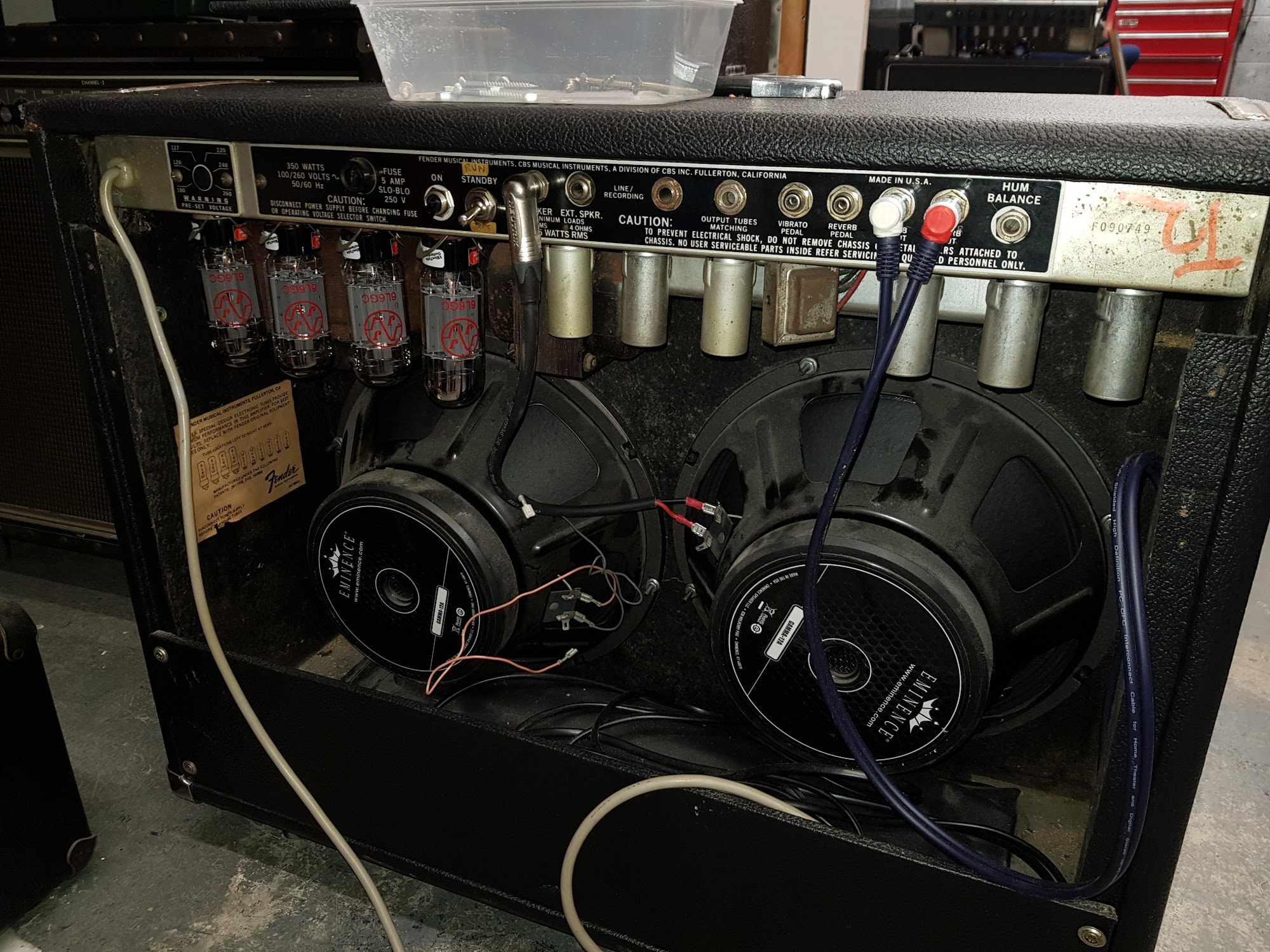
The old 6L6 power valves were physically coming away from their bases and tested worn, so a new matched quad of JJ 6L6GCs was fitted and the bias checked. The screen grid resistors were out of tolerance, so these were replaced too. We also carried out the standard safety work we’d expect to do on a Twin of this age.
After reassembly we found one of the two speakers wasn’t working. This amp has Eminence Gamma 12 speakers rather than the JBLs it would have left the factory with. They’re PA speakers rather than guitar speakers, but they’re good quality and sound good in this amp. If you’re mixing speakers in a two-speaker amp, you want to roughly match their sensitivity, otherwise one will be noticeably louder than the other. The Gammas are rated at 98dB/W and a Jensen C12N is 97.5dB/W, so the dead speaker was replaced with a C12N. The speaker cable also needed replacing.
The amp then went through our usual testing, including a soak test.
You can also read about an earlier Fender Pro Reverb repair.
If you’re in need of a Fender amp repair, please contact me.

 I started out by performing a basic valve amp service upon the amplifier. This involves testing all the valves with my valve tester. 3 preamp valves were found to be faulty: this proved to be the cause of the gain channel dropout. This Orange amp repair didn’t require checking of the bias of the amp, because the Rockerverb MK II has Orange’s proprietary ‘DIVO’ power valve management, meaning that the amp biases itself. It’s the only system that I’m aware of that doesn’t require matched valves in the output stage, so when one of the EL34s was found to have a snapped key on its base, I installed a 6L6GC in its place! I also fixed the snapped key so it could be used.