Blackstar Repair – HT40

blackstar-amp-repair

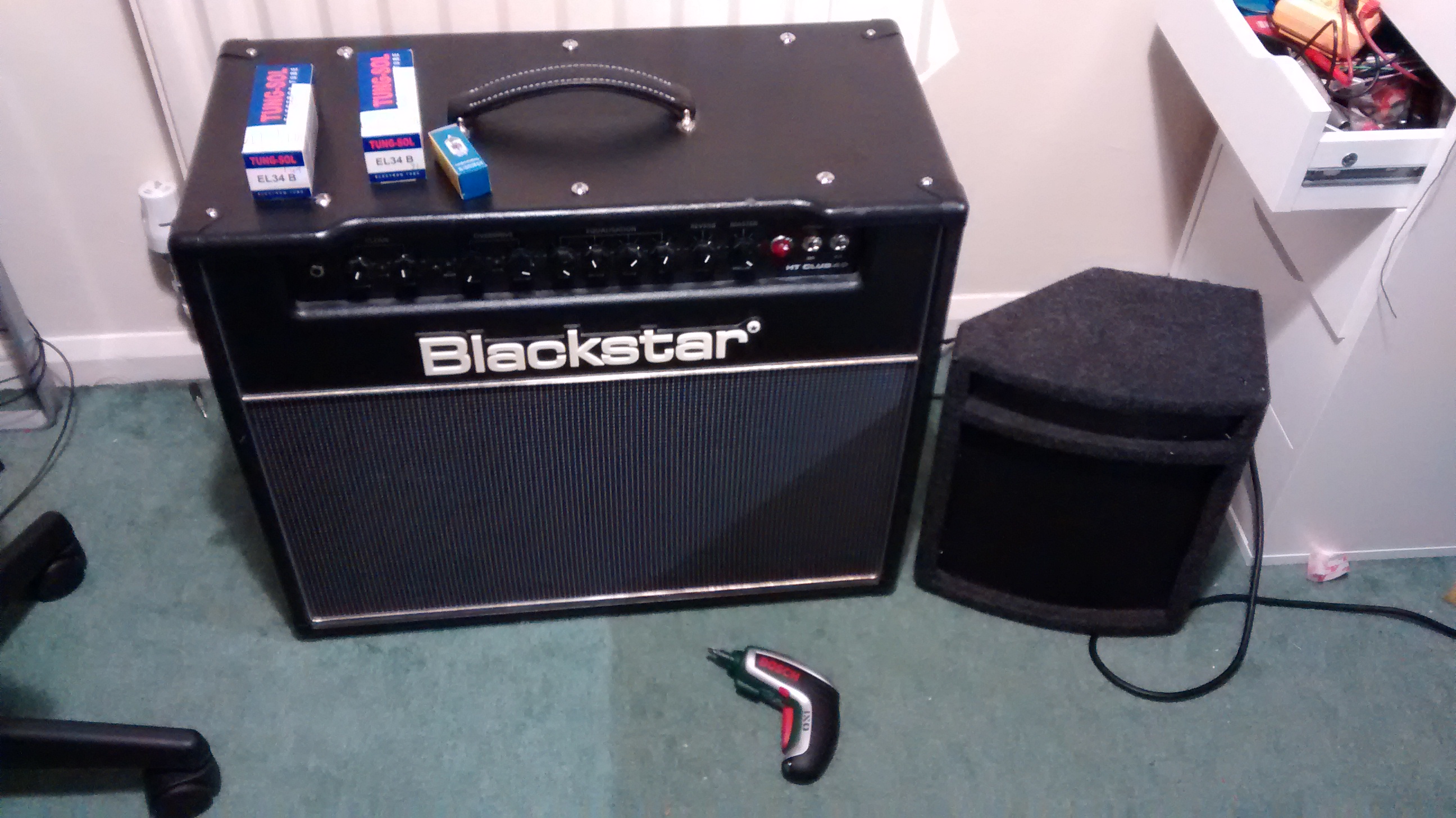
Recently, a Blackstar amp repair was brought to my workshop in Newark. The amp was an HT40 (the Club 40 combo) in working condition, but the owner wanted to try a new set of EL34 power valves in the amp. He selected a matched pair of Tung Sol with slightly higher gain (according to my valve tester) than then outgoing stock Ruby parts.

However, whilst checking the amp over my valve tester highlighted a fault in one of the Sovtek preamp valves, so I’ve replaced this with a JJ ECC83S.
HT-CLUB-40-Repair

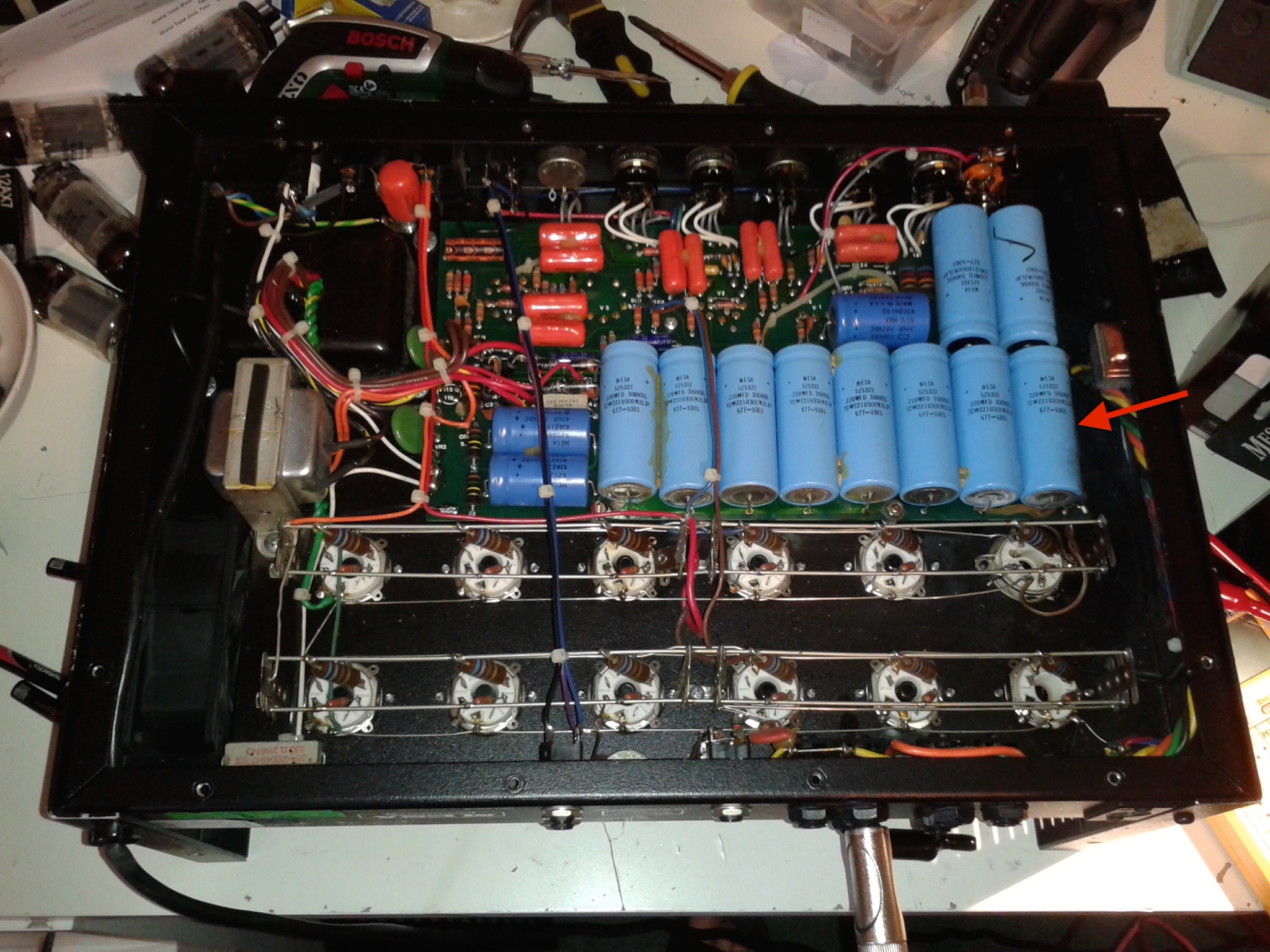
There’s an interesting and fairly unusual element in these Blackstar HT amps – they appear to use a transistor Phase inverter (you can see it in the image at the top), so all the 4 gain stages in the 2 12AX7 preamps are used purely for gain in the preamp circuit. They sound great. This unit doesn’t use the DPR circuit that I mention on that page.

Anyone who knows me as a player, rather than a tech will know I’m a bit of a Blackstar amp fan. I play a Blackstar Series 1 50W head (recently upgraded from a heavy Blackstar Series 1 45 combo). I almost bought one of the these HT40s actually!blackstar-valve-amp-bias

If you have a blackstar repair, please get in touch!
Vintage AC30 repair – 1962 Vox repair

1962 Vintage Ac30 Repair

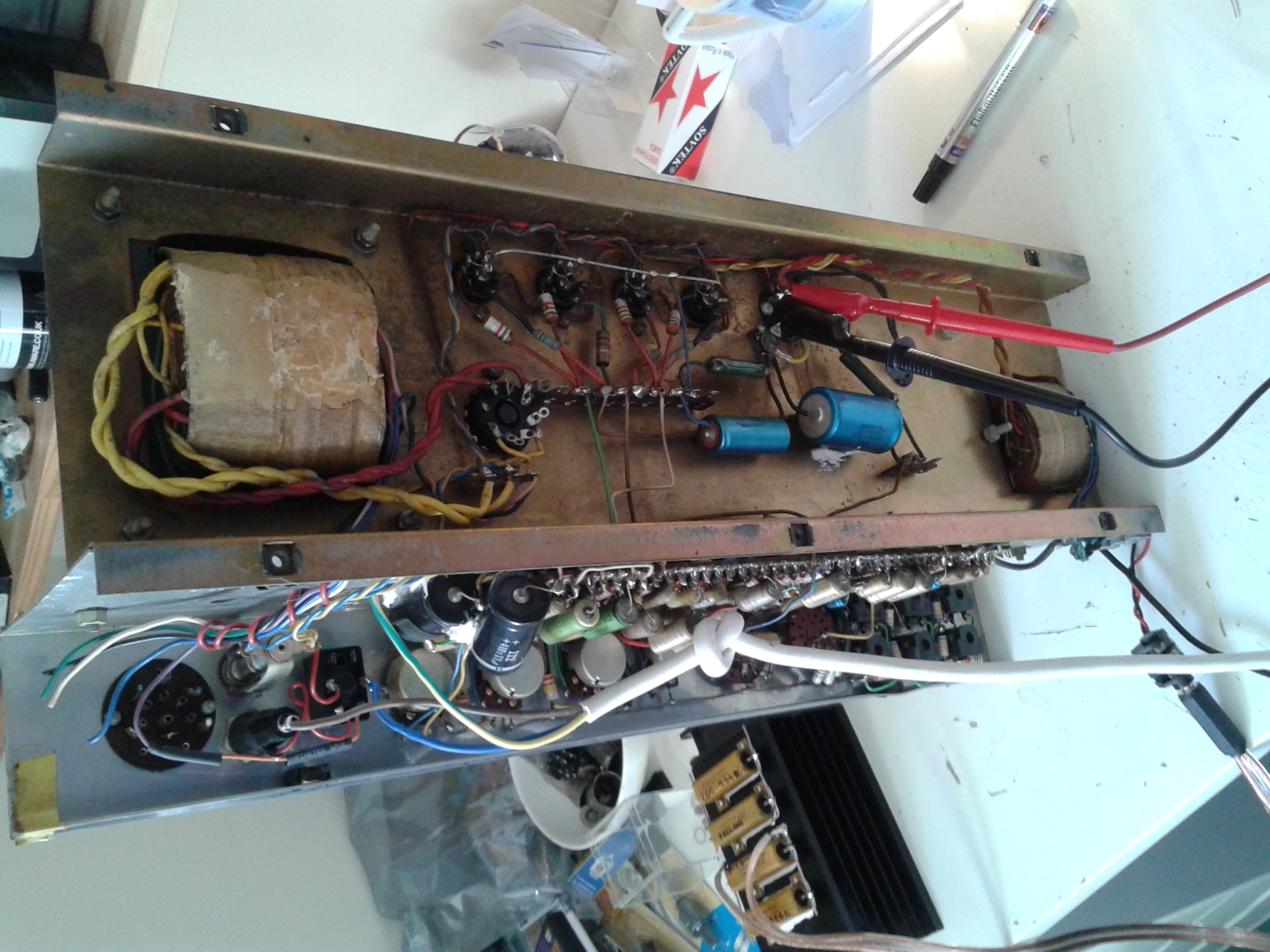
The guys over at Confetti in Nottingham brought me this vintage AC30 repair. It appears to be a 1962 JMI era Vox model but I’m an amp tech, not an amp historian, so I may be mistaken! It’s definitely an AC30/6 model, only made in smooth black vinyl in 1962. It’s very nice!

The customer brought this to me because they were worried about the amplifier getting very hot. I also noticed that the power cord was damaged and that the amp had a ‘Pin’ style voltage selector common in vintage amp repairs. I always recommend that this is wired out if not already.

The power cord has been replaced and the voltage selector wired to 245 (best match for modern UK), so the switch is now a dummy.

The overheating was caused by leaking reservoir caps which were replaced. Electrolytic caps have a lifetime of about 20 years so leaking caps are common in vintage amps. Faulty capacitors can lead to a much higher current draw through the transformer, overheating it, causing the issues we’re seeing. It also ties in with the internal HT being over 100V too low.
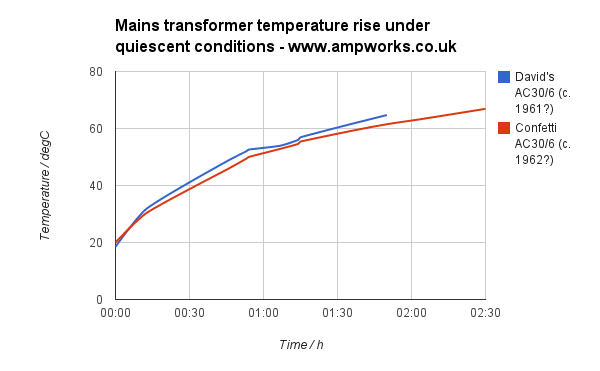
Vintage Ac30 Mains transformer temperature rise
I noticed that the tremelo mode switch had come loose and the resistor wires have sheared at the body of the device. They were replaced using vintage style carbon composition resistors for authenticity’s sake. (Do carbon composition resistors make a difference to tone? According to R.G Keen, The jury is still out!). If you have one of these vintage units, make sure that you keep the switch tight to avoid similar problems.

The amp didn’t run especially hot after the caps had been replaced. The output valves are all matched and measure sensibly, and the amp is cathode biased, so there’s little risk of the output stage being out of spec. I had another vintage AC30 repair in (a cream ’61 model), so I was able to make a proper comparison of the running temperature of the two amps. You can see how close they were in the graph above.

I’m pleased to say that the customer was very happy with the vintage AC30 repair! If you have a Vintage vox, or any guitar amp in need of repair, please get in touch.

Mesa Boogie Bass amp Repair

Mesa Boogie Bass 400+ Repair

This mesa boogie bass amp repair had the highest power valve count I’ve seen. The amp uses no less than twelve 5881 6L6 valves!

Like the recent fender amp repair this valve amp was blowing fuses. Also like the fender repair, the failure was down to a damaged power tube. Two in fact.

Much is made of Mesa Boogie’s insistence upon the use of mesa branded valves on guitar forums and these guys come in for quite a lot of stick. You can read Randall Smith’s defence of the idea here. My opinion is that the principle is reasonable for the majority of non technical users.

In this case, the amp had been fitted with Sovtek valves. Aside from the two failures many of the valves no longer matched well.

By testing mesa boogie valves in my valve tester I know what non mesa valves are within mesa parameters for use in their amps. I could tell that 4 of the sovteks were out of spec, meaning that 6 of the 12 needed replacing. After completing this simple task the amp was fixed.

If you have a mesa boogie bass amp repair please contact me via the contact page.